Market and policy: The scale of infrastructure is expanded, and the standard system is upgraded simultaneously
- Marketing Dept
- 2025-09-28
- 0
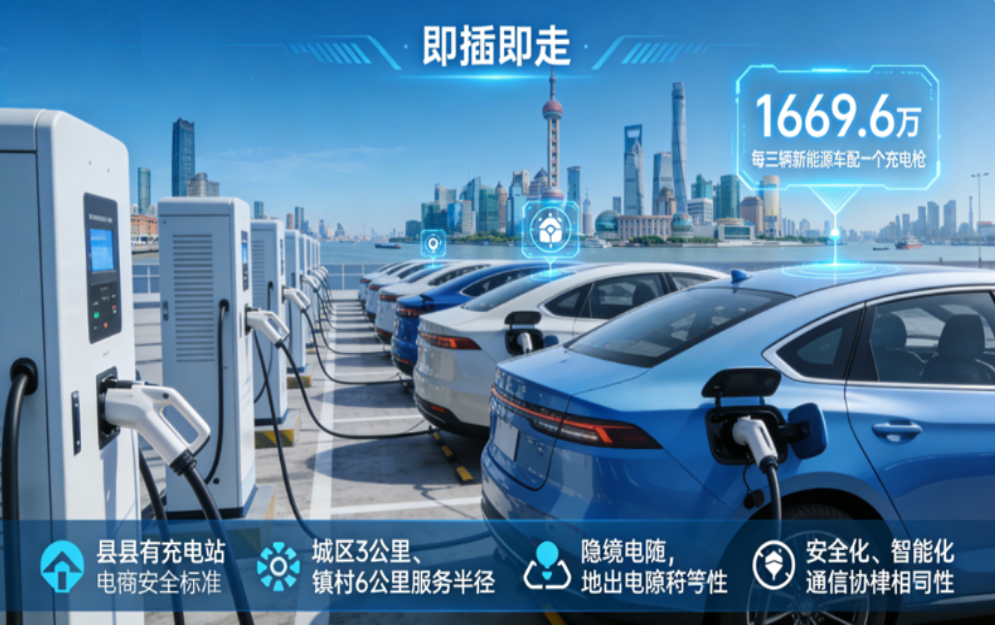
As of July 2025, the total number of charging infrastructure in the country will reach 16.696 million, achieving the ratio goal of "one charging gun for every three new energy vehicles", and core regions such as the Yangtze River Delta have been selected "Two hours in line" upgrades to "plug and go". The policy side continues to increase: the state promotes the construction of "counties and counties have charging stations", and Hubei Province has made it clear that 600,000 charging piles will be built in 2025, forming "urban area 3" km, 6 km in towns and villages" service radius; Beijing gives 300 per kilowatt to supercharging stations Yuan construction subsidy, Shanghai implements preferential electricity prices for public pile operation service fees. At the same time, the industry standards are further refined, and electrical safety requires that the insulation resistance of AC piles is not less than 10MΩ, DC piles are not less than 20MΩ, and the grounding resistance needs to be lower 0.1Ω, and the communication protocol is fully compatible with GB/T 27930 and ISO 15118 (supporting V2G bidirectional charging), promoting the upgrading of the charging ecosystem to "safe and intelligent".


 苏公网安备32131102000961号